ReNoteSearch workflows
How to research without losing your train of thought
Keep a decision, its sources, and the questions around it connected. A practical research flow for returning from a detour with useful evidence.
Name the decision before collecting sources
Write the question your research must answer. For example: when should our application invalidate its cache? Record the constraints you already know and what would count as enough evidence. Keep this as your starting note. Without a decision or question, a collection of sources can expand indefinitely without helping you do the work that prompted it.
Separate evidence from interpretation
Save source URLs and dates alongside a short description of what each source supports. Keep your interpretation and unresolved questions in separate paragraphs. Highlight time to live when you need to understand it more deeply. Open the concept note and connect it to the original decision. ReNoteSearch preserves the relationships between notes; it does not certify the sources or manage citations as a dedicated reference manager would.
Take a detour with a way back
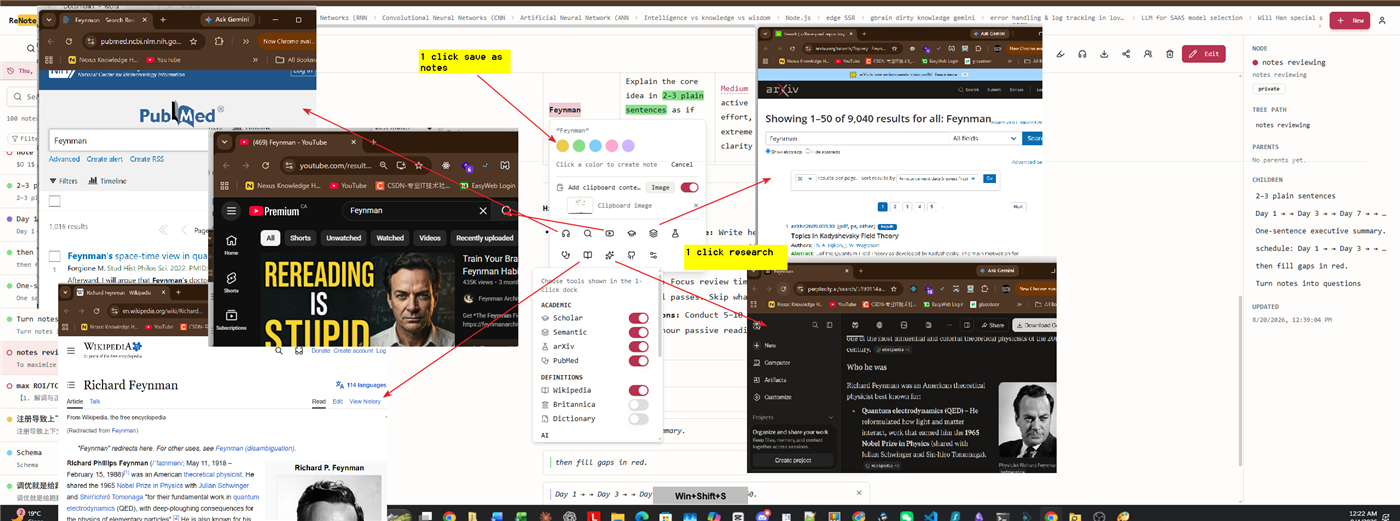
Use a linked note for a concept you have already captured. For a new question, the selection research dock can open an external search using selected text. Return to the original decision through the navigation trail and record whether the new source changes your view. This keeps the reason for a detour visible even when research spans several tools.
Leave a conclusion another person can inspect
Summarize the options, the evidence for your recommendation, and what would make you revisit it. Preserve the links rather than pasting an unexplained AI answer. Before sharing, inspect exactly which notes are public or shared with a recipient. Private working notes should stay private. The useful handoff is a conclusion with a recoverable trail of evidence.
Revisit when the assumptions change
Use search or the calendar to find the decision again. Check source dates, requirements, and unresolved questions before reusing an old conclusion. Research flow means reducing the effort of recovering context; it does not remove the need for judgment. Start with one bounded decision and judge the workflow by whether you can explain why you made it a week later.
Try it: investigate a caching decision without losing the original question
- Create a note for the decision: when should our application invalidate its cache?
- Save source links and highlight a concept such as time to live that needs a closer look.
- Open a connected concept note. Record evidence, tradeoffs, and unanswered questions separately.
- Return to the decision through the navigation trail and summarize what the sources support.
- Revisit the decision when requirements change. Check the source date before reusing a conclusion.